
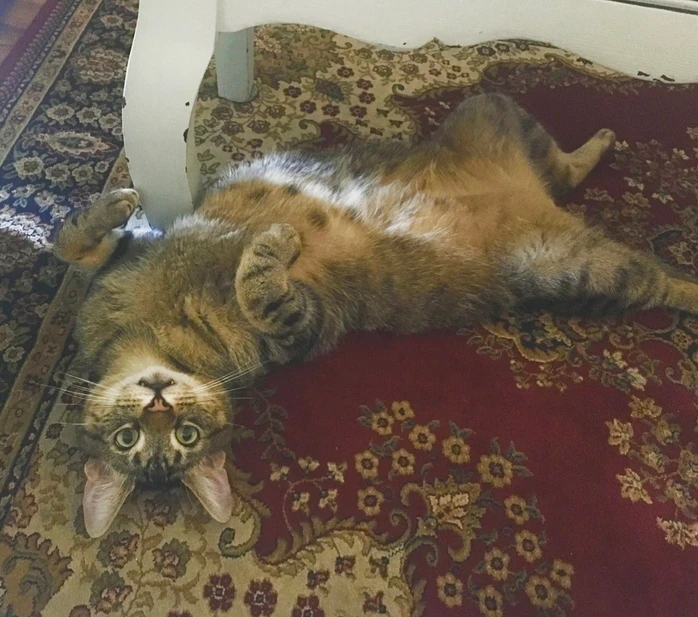
On March 3, 2026, I said goodbye to my best friend. His name was Leo.
Losing a pet is one of the hardest experiences we go through as animal lovers because they aren’t “just pets.” They are our companions, our routines, our comfort, and the little personalities that make a house feel like home. Leo was all of those things to me.
For seven years, he was by my side through some of the biggest changes in my life. He was with me during the pandemic. He moved with me through three different states. He slept next to me every night. He was there through the ordinary days and the difficult ones. And then suddenly, he wasn’t.
I’m sharing Leo’s story not only to honor him, but also for anyone who has experienced the heartbreak of losing a pet. I also hope it helps other cat parents who are navigating a diagnosis of Chronic Kidney Disease (CKD), because I know how scary and overwhelming those words can feel.
The Cat Who Chose Me
I adopted Leo in 2019 from the Agoura Hills Animal Shelter in California. Or maybe I should say… Leo adopted me.
I was in the communal cat room with a volunteer, playing with another cat, when a large brown tabby stuck his head out of a cat tree in the corner. He wasn’t making a big fuss or demanding attention. He was just quietly watching me. “Who is that?” I asked. They told me his name was Leo.
He eventually came out of his hiding spot, walked right over to me, rubbed against my legs, and started playing. It felt like he had already made his decision. The shelter gave me some information from his previous owners. One thing immediately stood out: “He hates children. Would do best in a home with a single person or a couple without kids.” I remember thinking, Me too, Leo. Me too. Lol!
And that was it. I took him home that day.
My Best Friend
Leo was a big cat (15 lbs!) with an even bigger personality. He was confident, funny, playful, and endlessly entertaining. He had this way of making himself part of everything I did. All I had to do was call his name and he would come trotting over, tail held high in the shape of a question mark. He slept with me every night. If someone came to the door, he would growl like a dog, convinced it was his responsibility to protect me. One of my favorite things about Leo was his love for my curly hair. He would bury his face in it while we cuddled, completely content. He wasn’t just a cat I lived with. He was my companion. My little shadow. My best friend.
When I lost him, I didn’t just lose a pet. I lost a piece of my daily life.
The Diagnosis That Changed Everything
When Leo was seven years old, we went in for what I thought was a routine veterinary visit. His bloodwork showed elevated creatinine levels, and we learned he had Stage 2 Chronic Kidney Disease. I was completely shocked. Leo didn’t seem sick. He was eating normally. His energy was normal. His weight was stable. His personality hadn’t changed.
Looking back, there were some subtle signs. He drank a lot of water and used the litter box more frequently, but nothing that made me think something serious was happening. That’s one of the hardest things about feline kidney disease. Cats are incredibly good at hiding illness. They often continue acting like themselves even while something is happening internally.
Leo’s diagnosis felt especially unfair because he was so young. I immediately started asking myself all the questions many pet parents ask:
Did I do something wrong?
Did I feed him the wrong food?
Could I have caught it sooner?
Was there something I should have done differently?
The answer I eventually had to accept was this: I loved him. I cared for him. I did the best I could with the information I had. And that was enough.
Years of Good Days
After his diagnosis, Leo continued to be Leo. We managed his CKD, monitored his health, and enjoyed our time together. I am not a big fan of "prescription" pet foods. My vet was able to give me a list of CKD-approved foods that were lower in protein and phosphorus. If your cat has CKD and you’re exploring non-prescription options, I received this list from Integrative Veterinary Service in Brookfield, WI.
Recommended Options:
- Wellness Healthy Indulgence Morsels (Chicken & Liver)
- Wellness Healthy Indulgence Morsels (Chicken & Salmon)
- Wellness Healthy Indulgence Morsels (Turkey & Duck)
- Weruva Goody Stew Shoes
- Weruva What a Crock
- Weruva Simmer Down
- BFF Stir It Up
- BFF Cloud 9
- BFF Dream Team
- BFF Live ‘N Love
- BFF Be Happy
- Darwin’s Intelligent Design KS Veterinary Formula
Phosphorus-Restricted Diets:
- Forza10 Renal Support (Canned)
- Medicus Kidney Support (Freeze-Dried)
- Weruva WX (Canned)
Most of these are available at local pet stores or Chewy, while Darwin’s and Medicus must be ordered online. (Always consult your vet before making dietary changes.)
Even as his disease progressed, he still played, cuddled, greeted me, and filled our home with his personality. About five months before he passed away, Leo had progressed to Stage 4 CKD. But even then, he still acted like himself. That’s what made the end so difficult. There wasn’t a slow goodbye. There wasn’t a gradual change where I felt prepared. Everything changed almost overnight.
The Night Everything Changed
A few days before our scheduled veterinary appointment, Leo stopped eating. Not just eating less. Not eating. This was incredibly unusual for him. Leo loved food, and I couldn’t even tempt him with one of his favorite Churu treats.
That night, he didn’t sleep with me. That alone told me something was very wrong. Around 4:30 in the morning, he finally came into the bedroom, but he couldn’t get comfortable. He would lay down, get back up, move to another spot, and try again. He tossed and turned all night. I didn’t sleep. I could feel that he was in pain, and it was one of the hardest feelings I’ve ever experienced—watching someone you love suffer and knowing you can’t fix it.
The next morning, I took him to the veterinarian.
The Hardest Decision of My Life
The veterinary team immediately began trying to understand what was happening. They performed bloodwork, a urinalysis, an ultrasound, and X-rays. The results were devastating. His kidney values were literally off the charts. One of the machines used to measure certain CKD markers only went up to a certain number, and Leo’s results were beyond that range. The ultrasound showed that both of his kidneys were abnormal. They were different sizes, one was misshapen, and they had become hard. I asked my veterinarian, “Are his kidneys shutting down?” She gently replied “it appears they really want to.”
The next option was hospitalization at an ER for two to three days of continuous IV fluids to try to flush out his kidneys. But all I could think about was Leo being alone. We were incredibly bonded, and I knew being in an unfamiliar place surrounded by strangers would be extremely stressful for him. I couldn’t bear the thought of him being scared and looking for me, thinking I abandoned him.
Then my veterinarian mentioned another option. Euthanasia.
It wasn’t until she said the words out loud that I allowed myself to consider it. I looked at Leo, and I saw how much pain he was in. I realized that keeping him with me because I wasn’t ready to say goodbye wasn’t fair to him. As much as I wanted more time, I loved him too much to let him suffer. So I made the hardest decision I have ever made. I let him go.
Saying Goodbye
I held Leo as the medication was given. It happened so quickly. One moment he was there. The next moment, he was gone. When the veterinarian listened to his heart with her stethoscope and said, “He’s gone,” I completely broke down. I collapsed on the ground, holding him and sobbed.
“I’m so sorry. I’m so sorry”, I wailed.
The veterinary team was incredibly kind. They gave me as much time as I needed, and I ended up staying in that room with him for about three hours. One of the hardest things I experienced was that the morphine he was given for pain changed his scent. Leo always smelled like Leo. It was something familiar and comforting. But after the medication, he didn’t smell like himself. I buried my face in his fur, searching for that familiar scent, and when I couldn’t find it, I started crying even harder.
“What did I do?” I kept saying. “What did I do?”
A veterinary technician came in to check on me, and I told her I felt like I had made a huge mistake. She looked at me and said something I will never forget:
“Everyone says that.”
Then she added: “He was really, really sick.”
Those words helped me more than she probably realized. Because she was right. Leo was really, really sick.
What I Wish Every CKD Cat Parent Knew
If your cat has Chronic Kidney Disease, I want you to know that you are not alone. CKD is one of the most common diseases affecting cats, especially as they get older. Unfortunately, many cats show very few signs in the early stages.
Some common symptoms include:
- Increased thirst
- Increased urination
- Weight loss
- Decreased appetite
- Vomiting
- Lethargy
- Poor coat condition
- Bad breath
In later stages, cats may experience muscle loss, weakness, hiding, or signs of discomfort. If you notice changes in your cat, always talk with your veterinarian. Early detection and monitoring can help improve quality of life.
One resource that helped me tremendously during Leo’s diagnosis was the Feline Chronic Kidney Disease Information Hub:
It is an incredibly detailed resource for cat parents trying to understand CKD and make informed decisions.
Learning to Live Without Leo
Grief after losing a pet is complicated. Some days I feel okay. Other days, it still feels impossible that he isn’t here. My apartment felt completely different without him. For days, I struggled to sleep in my bed because he wasn’t curled up beside me like he had been for years. I created a small memorial with his ashes, paw print, and photos. I also got a tattoo of Leo so that I can carry him with me every day. These things don’t erase the sadness. But they help me honor the life we shared.
Leo’s Legacy
If you've found this article because your cat has CKD, I hope Leo's story brings you comfort more than sadness. Cats with kidney disease can still live joyful, love-filled lives after diagnosis. Leo certainly did.
Take the pictures. Cherish the ordinary days. Spoil them a little. Tell them you love them. And when the day eventually comes that you have to make the hardest decision of your life, remember this: Choosing a peaceful goodbye isn't giving up. It's one final act of love.
I miss you every day, Leo.
Thank you for choosing me all those years ago.